Enhanced Risk Weather Threatens Midwest Economic Hubs
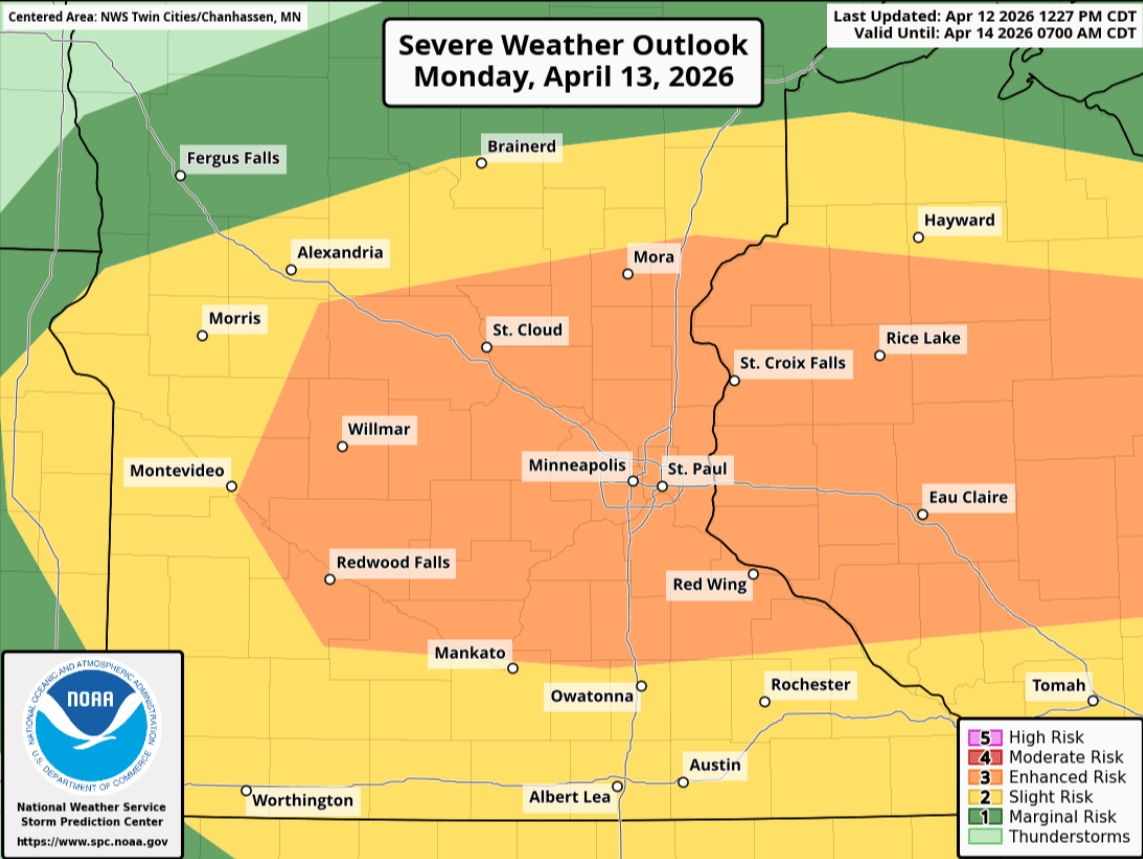
The convergence of atmospheric conditions across the Upper Midwest and Great Lakes region has prompted an Enhanced Risk (Level 3 of 5) classification for severe weather. This designation, covering major metropolitan areas including Minneapolis, Chicago, and Detroit, signals a heightened probability of impactful events that extend beyond typical seasonal volatility, posing systemic threats to regional economic activity.
The forecast specifically identifies threats critical to economic operations: large hail potentially exceeding two inches in diameter, damaging wind gusts up to 60 mph, and the possibility of isolated strong tornadoes. These conditions are projected to peak during critical evening hours, directly coinciding with high-volume travel and logistical operations. The classification of an Enhanced Risk, rather than a lower category, alters the operational calculus for regional businesses and infrastructure managers, triggering specific protocols for risk mitigation in sectors where downtime or physical damage carries substantial financial weight.
Insurance Sector Exposure and Risk Modeling
The specific threat of large hail, potentially reaching baseball size, presents a significant exposure for property and casualty insurers operating in the region. Hail damage from stones exceeding two inches often results in high-severity claims for roofing, vehicles, and structural integrity. Unlike wind damage, which can be widespread but variable, large hail tends to create concentrated, high-cost losses that quickly accumulate across densely populated areas like the Twin Cities metro and surrounding suburbs.
For insurers, an Enhanced Risk forecast triggers immediate adjustments in catastrophe modeling (CAT modeling) and claims preparation. The potential for widespread property damage necessitates a pre-emptive increase in claims processing resources and a review of reinsurance arrangements. A single event of this magnitude can significantly impact quarterly results for regional carriers and influence future premium adjustments, particularly in states where weather-related losses have been increasing in frequency and severity.
The financial impact extends beyond immediate claims payouts. Reinsurance markets, which provide a backstop for primary insurers, closely monitor these events. A high-severity hail event in a major metropolitan area can lead to a significant draw on reinsurance capital, potentially tightening market capacity and increasing costs for insurers globally. This systemic effect demonstrates how localized weather events in key economic zones can ripple through global financial markets.
Logistics and Supply Chain Vulnerability
The geographic scope of the Enhanced Risk area, encompassing major logistics hubs like Chicago, Detroit, and Minneapolis, exposes critical supply chain infrastructure to potential disruption. The timing of the threat—from 4 PM to 10 PM—directly impacts peak operational hours for air freight, rail networks, and intermodal transport. Chicago’s role as a central node for North American rail and road freight means that delays caused by severe weather can create bottlenecks that ripple across the entire continent.
For industries reliant on just-in-time (JIT) inventory systems, particularly automotive manufacturing in the Detroit area, even short-term delays in component delivery can halt production lines. The operational cost of these disruptions, including lost production time and expedited shipping fees post-event, often exceeds the direct cost of physical damage. The threat of damaging winds and potential tornadoes necessitates pre-emptive shutdowns of port operations, rail yards, and air traffic control, impacting a wide range of industries.
Furthermore, the potential for power outages caused by 60 mph winds adds another layer of complexity. Logistics facilities, distribution centers, and manufacturing plants rely heavily on consistent power for automated processes and inventory management systems. Prolonged outages can compromise cold storage supply chains and delay data processing necessary for tracking shipments, creating a cascading failure effect throughout the logistics network.
Energy Infrastructure Resilience and Capital Investment
The forecast for damaging winds and potential tornadoes directly challenges the resilience of regional power grids. Utilities in the Upper Midwest and Great Lakes regions face the strategic decision of balancing operational continuity with capital investment in infrastructure hardening. The cost of repairing damage from severe weather events, coupled with regulatory pressure to minimize customer outages, drives long-term investment strategies.
Utilities must implement advanced monitoring and response protocols to manage the threat. This includes pre-positioning repair crews, securing critical infrastructure, and communicating potential outage risks to customers. The financial burden of these preparations and subsequent repairs often falls on ratepayers, highlighting the link between climate volatility and utility costs. The Enhanced Risk classification forces utilities to activate high-level emergency response plans, diverting resources from routine maintenance and capital projects.
The regulatory environment plays a crucial role in shaping utility responses. Public utility commissions in states like Minnesota and Wisconsin often scrutinize utility performance during major weather events. The frequency of severe weather, as indicated by recurring Enhanced Risk forecasts, increases regulatory pressure for investments in grid modernization, including smart grid technologies and undergrounding power lines, to mitigate future vulnerabilities. These investments represent a significant long-term capital expenditure driven by evolving weather patterns.
Strategic Stakeholder Response and Economic Impact
The specific forecast details, including the timing and severity of potential impacts, inform critical decision-making processes for businesses and government agencies. The warning of rapidly changing conditions during peak evening activities necessitates pre-emptive action. Businesses may implement work-from-home policies, adjust retail hours, or secure outdoor assets to mitigate risk. The economic cost of these pre-emptive measures, while difficult to quantify precisely, includes lost productivity and reduced consumer spending during the affected period.
For local governments and emergency services, the Enhanced Risk classification triggers a full activation of emergency response protocols. This includes coordinating resources across multiple jurisdictions, preparing shelters, and disseminating public safety information. The potential for a strong tornado requires a heightened state of alert, diverting resources and attention from other municipal functions. The effectiveness of these preparations directly impacts public safety and the speed of recovery operations, underscoring the systemic vulnerability of highly interconnected modern economies to natural perils. This requires a shift from reactive recovery to proactive resilience planning across public and public and private sectors.