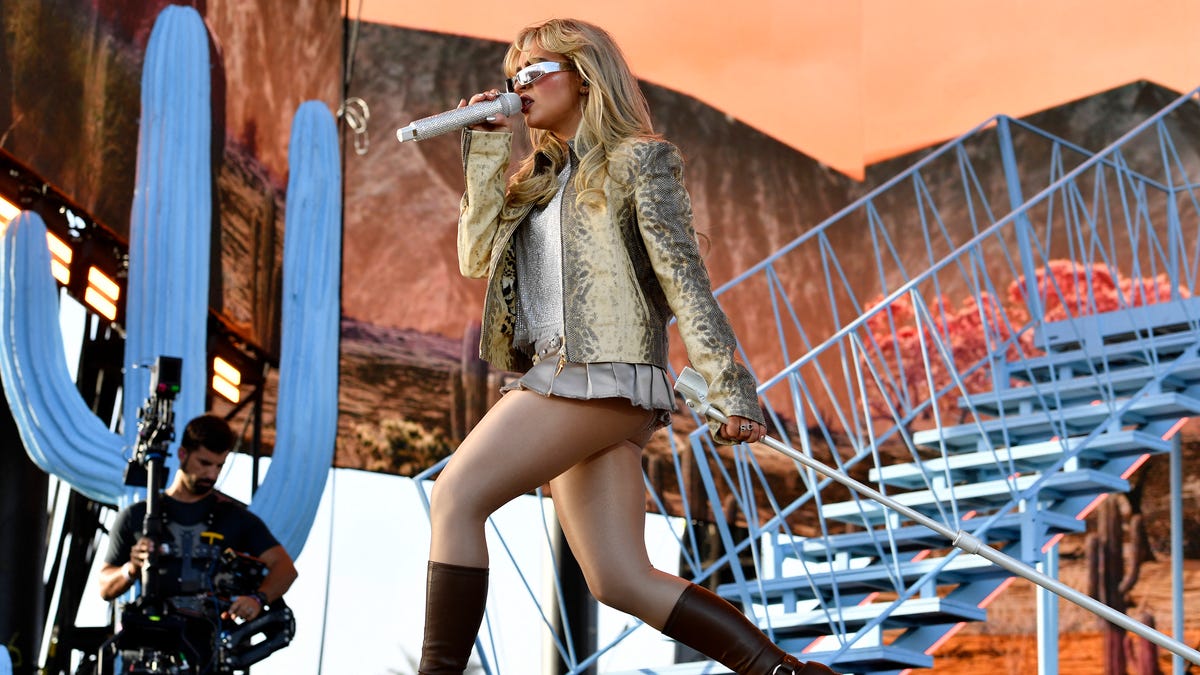
Karol G’s Coachella Stance: Navigating Regulatory Risk & Cultural Activism
Karol G, as the first Latina headliner at Coachella, strategically transforms her performance beyond a mere musical event into a potent act of cultural advocacy. Her explicit intent to critique U.S. Immigration and Customs Enforcement (ICE) positions her at the volatile nexus of artistic expression, significant regulatory risk, and identity-driven political discourse. This deliberate decision to address contentious U.S. immigration policy—specifically targeting ICE rather than offering a generic statement—markedly elevates the stakes. It leverages a career milestone to directly engage with an issue profoundly resonant with her core Latinx audience, thereby challenging the conventional separation between global entertainment and specific political commentary for non-U.S. citizens operating under U.S. jurisdiction. This move sets a crucial precedent for international artists’ engagement with sensitive political subjects.
The Regulatory Lever: Visa Revocation as an Economic & Expressive Constraint
Karol G’s inner circle explicitly warned her of severe consequences, including visa revocation, should she proceed with her planned critique. This direct threat exposes the profound structural vulnerability faced by foreign nationals, even globally renowned artists, whose professional livelihood and access to the critical U.S. market are entirely contingent upon their visa status and perceived ‘good standing’ with regulatory bodies. The potential revocation of a work visa is not merely an inconvenience; it represents the loss of an essential operational permit. For a headlining artist like Karol G, this translates into multi-million dollar contractual breaches, logistical chaos for large-scale tours involving extensive staff, and severe reputational damage. The implied threat functions as a potent regulatory lever, creating a chilling effect that compels foreign artists to self-censor, forcing a high-stakes calculation between artistic integrity, freedom of expression, and catastrophic career instability. Karol G’s description of feeling like a “pawn” underscores this inherent power imbalance.
Conflicting Imperatives: Artistic Autonomy Versus Commercial Risk Management
The internal warnings highlight a core conflict between Karol G’s artistic autonomy and her team’s commercial imperatives. Her management and legal advisors are primarily tasked with safeguarding her financial interests and ensuring uninterrupted operational capacity within the lucrative U.S. market. Their counsel to avoid overtly confrontational slogans like “ICE Out” reflects a calculated risk assessment, aiming to minimize regulatory exposure. In contrast, Karol G’s resolve to proceed despite these cautionary advisories signals a deliberate prioritization of cultural authenticity and deep audience connection over immediate operational security. Her stance aims to cement her role as an influential voice for the Latinx community, potentially bolstering long-term brand equity and loyalty through advocacy, even at the cost of heightened short-term regulatory vulnerability. This decision fundamentally redefines the artist-audience contract, extending beyond pure entertainment to embrace a proactive stance on social justice.
Coachella’s Global Stage: Amplifying a Targeted Political Statement
The Coachella festival, a globally broadcast cultural phenomenon, provides an unparalleled platform for amplifying Karol G’s planned critique. With its extensive media infrastructure, including multi-channel YouTube streaming in 4K, the performance transcends a live event to become a global broadcast, reaching millions beyond the physical audience. This strategic choice maximizes the visibility and impact of her political message. By leveraging Coachella’s mainstream reach, Karol G ensures her message resonates not only with her dedicated Latinx fanbase but also penetrates a broader, potentially less informed, global audience regarding the complexities of U.S. immigration policy. The deliberate juxtaposition of a pointed political statement within a high-profile entertainment spectacle creates a compelling, high-contrast narrative designed to command significant media attention and propel public discourse.
Challenging Institutional Authority: Precedent for Non-Citizen Free Speech
The explicit warnings received by Karol G offer crucial insight into the institutional dynamics of immigration enforcement, revealing how implicit threats against foreign nationals can effectively influence public discourse and self-censorship. This scenario underscores a significant structural power imbalance, where regulatory agencies possess the leverage to potentially disrupt global careers through administrative action, thereby shaping permissible expression. Karol G’s determination to resist this pressure, despite the significant personal and professional risks, directly challenges the institutional authority seeking to curtail public criticism. This pivotal situation highlights the evolving role of cultural figures as strategic actors in shaping public opinion on sensitive policy issues. Her experience sets a crucial precedent for other international artists navigating the U.S. regulatory and political landscapes, emphasizing the precarious balance between artistic freedom and visa-dependent operational status for non-citizens. Unlike U.S. citizens who enjoy robust free speech protections, foreign nationals operate under distinct legal standards, making Karol G’s stand a landmark case for cultural activism in a high-stakes geopolitical environment.