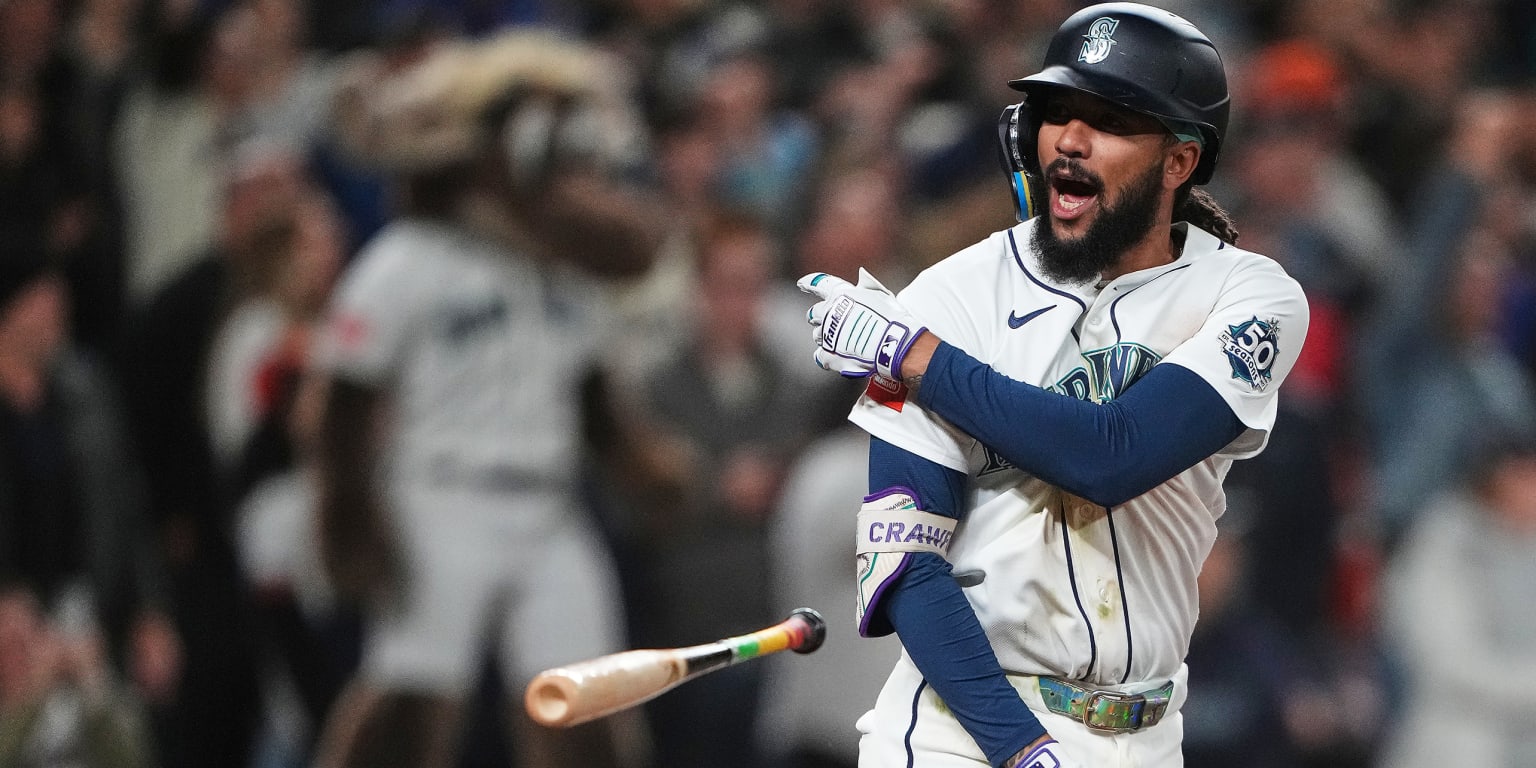
The Seattle Mariners’ 8-7 victory over the Houston Astros on Saturday night provided a stark case study in the disparity between offensive volume and late-game execution. Despite being out-hit 17 to 8, Seattle leveraged a ninth-inning systemic breakdown in the Houston bullpen to secure the win. This result extends the Astros’ losing streak to six games, highlighting a critical deficit in high-leverage reliability for the defending AL West heavyweights.
Bullpen Erosion and Command Failure
The game’s inflection point occurred in the bottom of the ninth when Houston’s Bryan Abreu surrendered the tactical advantage by walking the bases loaded with one out. This collapse in command neutralized Houston’s defensive positioning and forced a high-pressure confrontation that favored J.P. Crawford. Crawford, statistically one of the most efficient situational hitters in Mariners history, capitalized with an RBI single, marking his eighth career walk-off and moving him into a tie with Mitch Haniger for the franchise lead.
Seattle’s success was predicated on discipline; by refusing to chase marginal pitches during Abreu’s struggle, the Mariners’ lineup forced the Astros into a zero-margin-for-error scenario. This specific relief failure is part of a broader trend for Houston, whose bullpen depth has been increasingly exposed during their current skid.
The 13-Runner Deficit: Offensive Inefficiency
The statistical anomaly of the evening was Houston’s inability to convert 17 hits into a decisive lead. The Astros left 13 runners on base, a metric that underscores a fundamental failure in situational hitting. While Yordan Alvarez and Carlos Correa generated significant traffic, the team’s inability to deliver a knockout blow against Andrés Muñoz in the top of the ninth proved fatal. This disconnect between hit volume and run production has become the primary driver of Houston’s win-loss deficit.
Conversely, Seattle demonstrated superior run-scoring efficiency. After trailing by five, a fifth-inning power surge—headlined by Julio Rodríguez’s first home run of the season and a three-RBI performance from Cal Raleigh—erased the margin. Rodríguez’s 426-foot blast to center field suggests a technical recalibration that could alter Seattle’s offensive ceiling moving forward.
Injury Implications and Defensive Continuity
Houston’s tactical outlook is further complicated by the early exit of All-Star shortstop Jeremy Peña due to right posterior knee tightness. Peña’s absence removes a Gold Glove-caliber anchor from the infield and a reliable high-contact bat. The downstream effects of this injury were felt in the later innings as defensive rotations were adjusted under duress. The severity of Peña’s condition remains a critical variable for Houston as they attempt to stabilize their season against divisional opponents.
Institutional Stability vs. Tactical Flux
For the Mariners, the victory reinforces the value of their veteran-heavy core. Crawford’s career 30-for-77 mark with the bases loaded reflects a psychological resilience that the organization has prioritized in roster construction. With an attendance of 43,294, the environment at T-Mobile Park amplified the pressure on a reeling Houston staff, illustrating the home-field advantage inherent in high-stakes divisional play. As Seattle builds momentum, the Astros face an immediate need to address their bullpen’s high-leverage volatility to avoid falling out of early-season contention.