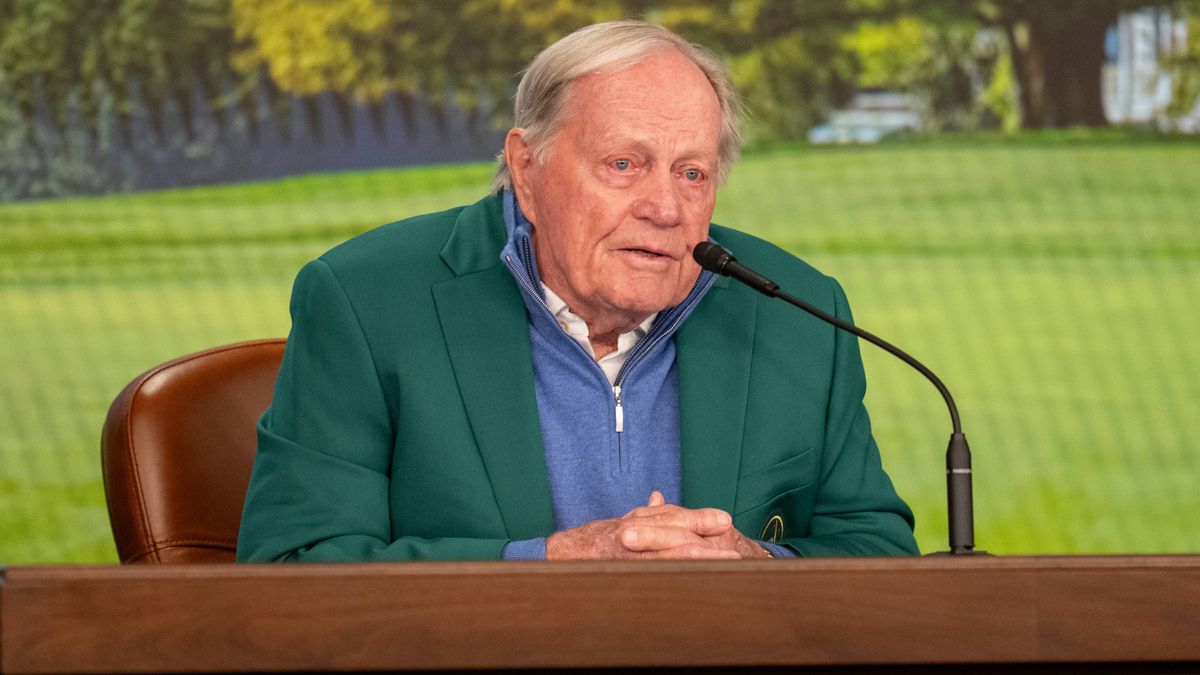
The Masters Champions Dinner functions as a primary institutional nexus for professional golf, operating as a closed-door summit where historical legacy intersects with contemporary commercial influence. During the 2024 gathering hosted by Jon Rahm, the meticulously curated atmosphere of exclusivity was punctuated by a physical incident involving two pivotal figures: Jack Nicklaus, the six-time champion and architect of the modern game, and 2008 winner Trevor Immelman. This moment, involving Nicklaus’s four-claw walking stick, serves as a poignant metaphor for the friction between the sport’s aging legends and its active stakeholders.
The Diplomatic Weight of the Defending Champion
Jon Rahm’s role as host was more than a ceremonial obligation; it was a diplomatic exercise in brand management within the Augusta National hierarchy. Following his 2023 victory, Rahm utilized the dinner to project cultural soft power, curating a Basque-inspired menu that signaled both his heritage and his status within the club’s lineage. This hospitality serves as a mechanism for institutional continuity, where the host’s investment in financial and social capital reinforces their standing among an elite cohort that includes Chairman Fred Ridley and legends such as Sir Nick Faldo and Tiger Woods.
The event functions as a high-stakes networking environment where personal alignments often prefigure broader professional shifts. For Rahm, the successful execution of the evening—described by attendees as peerless in its culinary and social standards—solidified his position as a statesman of the game. In an era of professional fragmentation, these gatherings provide a rare space for internal cohesion, ensuring that the primary ambassadors of the Masters brand remain aligned with the club’s long-term strategic objectives.
Generational Logistics and Biological Realities
The incident involving Jack Nicklaus and Trevor Immelman highlights the logistical challenges inherent in a tradition that relies on the participation of aging icons. Nicklaus, now in his mid-80s, utilized a specialized cane for stability—an operational necessity that led to an accidental injury to Immelman’s foot. This friction illustrates the ‘gerontological logistics’ facing Augusta National: the difficulty of balancing deep reverence for elder statesmen with the practical physical vulnerabilities of an aging membership.
The resulting limp for Immelman, who remains a visible media figure and active participant in the tournament’s ecosystem, demonstrates how private traditions carry tangible risks. While the atmosphere remained collegial, the mishap underscores the spatial pressures created when multiple generations of athletes, possessing vastly different levels of mobility, occupy restricted, high-prestige environments. It suggests that the club’s operational protocols must continually adapt to the changing physical profiles of its most honored guests.
The Symbolic Economy of Historical Artifacts
A defining feature of the 2024 dinner was the circulation of a driver once belonging to the legendary Ben Hogan. Passing such an artifact among current champions is a ritual of legitimacy, connecting modern players to the foundational lineage of the Masters. This practice reinforces the symbolic economy of the tournament, where a champion’s value is predicated not only on their present-day performance but on their proximity to the sport’s historical sanctum.
For younger champions like Jordan Spieth or Scottie Scheffler, handling Hogan’s equipment acts as a form of institutional induction. The driver serves as a physical conduit for the values of previous eras, distinguishing the Masters from other sporting events through a tangible connection to the past. This ritualized exchange ensures that the standards of excellence defined by Hogan and his contemporaries are transmitted to the current leadership, maintaining the brand’s historical weight.
Media Permeability and the Erosion of Privacy
Historically, the Champions Dinner existed as a ‘black box’ of tradition. However, the dissemination of the Nicklaus-Immelman incident via Sir Nick Faldo’s social media indicates a shift in how the club’s private sphere is monitored. The use of digital platforms by former champions to narrate internal events introduces a level of transparency that challenges Augusta National’s traditional narrative control. This shift requires a proactive communication strategy, as informal reports now shape the public perception of the club’s most guarded rituals.
While Faldo’s account was light-hearted, the rapid spread of the story demonstrates that no event at Augusta is truly shielded from the digital record. The club must now manage its reputation in an environment where its own members act as real-time broadcasters. This transparency, while offering fans unprecedented access, also demystifies the institutional aura that the club has spent decades cultivating, forcing a recalibration of how these ‘private’ moments are staged and secured.