
Market Temporal Decoupling and Executive Rhetoric
Global equity markets are demonstrating a sophisticated temporal decoupling from aggressive executive rhetoric. Following overnight volatility triggered by US administration threats against Iran, stock futures recovered as the tactical timeline shifted, specifically the deferral of potential military actions until Tuesday. This window allowed institutional investors to discount immediate kinetic risks in favor of emerging diplomatic channels.
The 0.4% climb in S&P 500 contracts and 0.6% rise in the Nasdaq 100 suggest capital is prioritizing de-escalation probability over rhetorical escalation. This price action indicates that the ‘war premium’ is currently viewed as a transient factor rather than a structural reassessment of asset valuations, provided the diplomatic machinery remains operational.
The Strait of Hormuz: Systemic Risk and Inflationary Mechanics
The Strait of Hormuz remains the primary pivot for global inflationary expectations. Any disruption to this maritime chokepoint introduces systemic risks to supply chains, potentially forcing a hawkish recalibration of central bank trajectories. Conversely, reports of a potential end to the blockade have acted as a deflationary signal, driving Brent crude back toward the $107 per barrel mark.
For institutional stakeholders, the risk is not merely supply volume but the logistics of maritime insurance and credit availability for energy-related transactions. The move toward a ceasefire directly alleviates these friction costs, providing a tangible boost to global risk appetite.
Diplomatic Intermediation: The 45-Day Tactical Window
The emergence of Pakistan as a mediator in the US-Iran standoff provides a credible ‘off-ramp’ that markets interpret as a structural stabilizer. The specific proposal for a 45-day halt in hostilities—reported by Reuters and Axios—offers a defined period of predictability. For corporate forecasting, this window is significant, as it encompasses a substantial portion of a quarterly reporting cycle, allowing for more stable capital allocation.
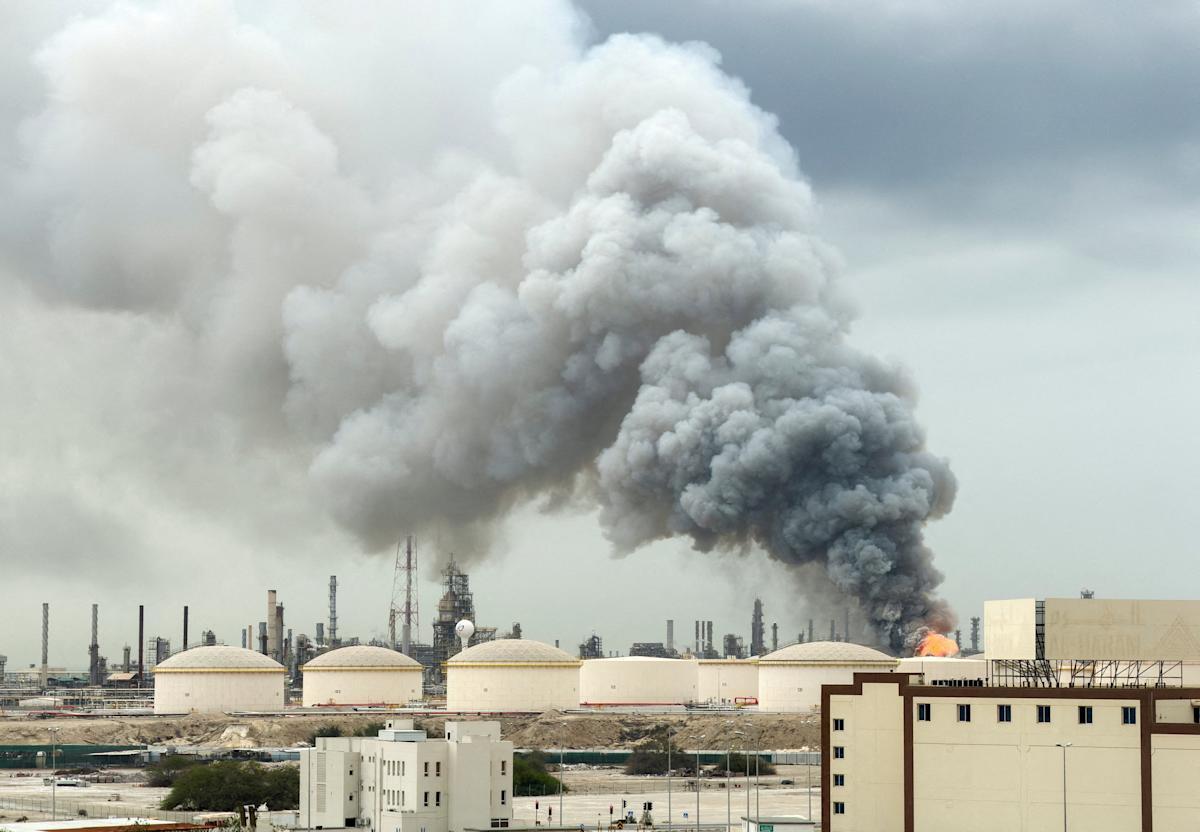
The fact that optimism prevailed despite physical infrastructure damage in the Gulf underscores a market-wide preference for non-military resolution. Investors are weighing the credibility of these third-party intermediaries as a buffer against unilateral escalation.
Sectoral Divergence: Tech Sensitivity to Energy Volatility
The Nasdaq 100’s outperformance relative to the Dow Jones Industrial Average highlights the technology sector’s extreme sensitivity to energy-driven discount rates. Growth-oriented firms, valued on future cash flows, are disproportionately impacted by inflationary spikes. The retreat in Brent crude provides a necessary reprieve for these high-beta assets.
This divergence reflects a tactical rotation; while the Dow’s 0.1% uptick shows caution in traditional industrials, the 0.6% Nasdaq gain suggests investors are quick to return to growth when the immediate threat of a stagflationary energy shock recedes.
Commodity Mean Reversion and Speculative Exhaustion
Oil’s reversal—falling 1.6% after an initial 3% spike—points to speculative exhaustion and a rapid mean reversion. The initial surge was driven by fear-based positioning, but the subsequent correction suggests that the threshold for sustained high prices is tied to the physical reality of a blockade rather than verbal threats. This volatility highlights the necessity for traders to synthesize real-time diplomatic intelligence with technical data to navigate the current geopolitical landscape.