The Parasitic Pivot: Financial Deconstruction in Westmont
In the second season of Your Friends & Neighbors, the protagonist Andrew “Coop” Cooper undergoes a calculated transition from institutional finance to localized criminal arbitrage. This shift is not merely a survivalist reflex but a strategic application of hedge-fund methodology to physical larceny. By treating the high-net-worth residences of Westmont Village as liquidatable assets, Coop leverages his insider knowledge of security protocols and class-based vulnerabilities to exploit the very demographic he once anchored.
The narrative explores the fragility of elite status, where the loss of professional leverage necessitates a radical reorientation of one’s career trajectory. Coop’s operational model is predicated on the social invisibility afforded by his ‘oak and mahogany’ persona—a mask of respectability that shields his predatory activities from the scrutiny of his peers.
Competitive Disruption and Capital Contestation
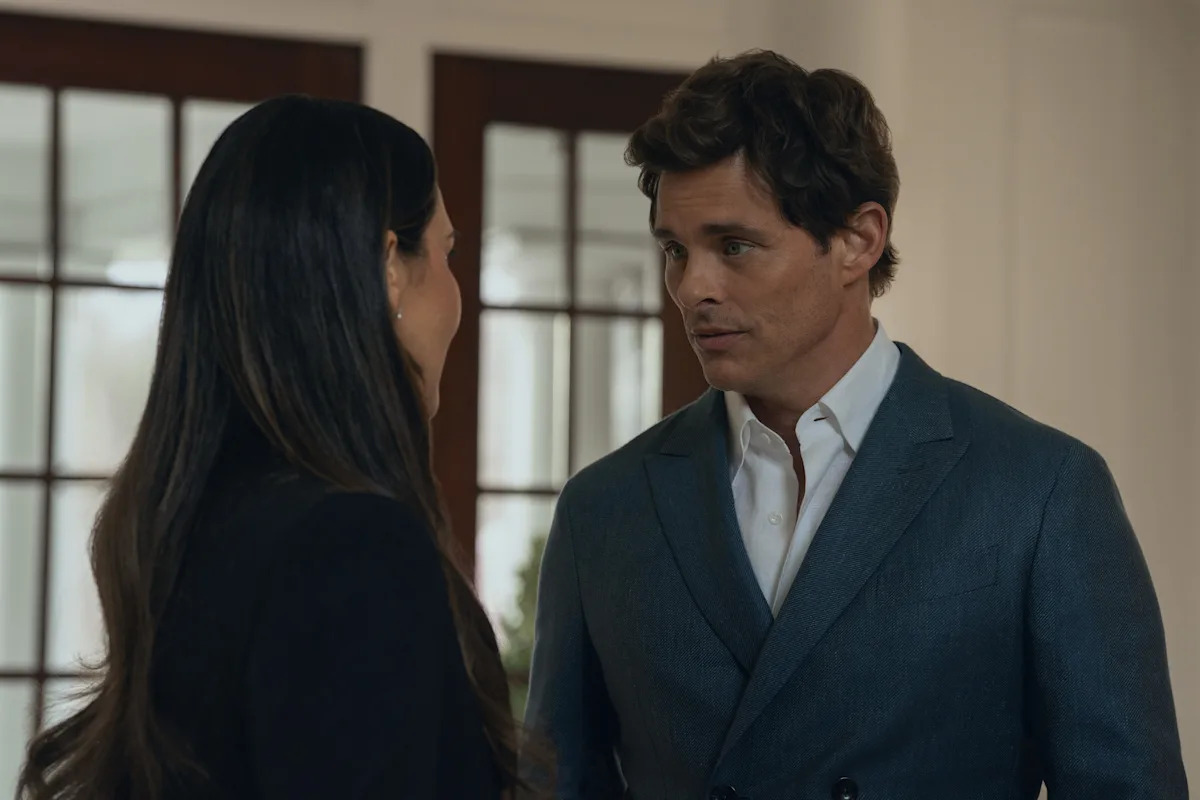
The introduction of Owen Ashe (James Marsden) serves as a structural catalyst, disrupting the established social hierarchy. Ashe’s presence, signaled by the ostentatious arrival of a blue McLaren, represents a shift toward more flamboyant, unvetted capital. This creates a zero-sum environment where Coop’s traditionalist facade clashes with Ashe’s disruptive wealth.
Ashe operates as a competitive variable, unburdened by the institutional ties of the Westmont country club elite. This independence allows him to navigate the social landscape with a degree of mobility that threatens Coop’s defensive posture. The resulting tension transforms the suburban setting into a battlefield of archetypes: the compromised insider versus the unpredictable newcomer, where reputational failure carries the weight of legal catastrophe.
The Pariah Economy and Reputational Atrophy
Samantha’s professional pivot into the real estate sector provides a critical lens into the mechanics of social ostracization. Despite legal exoneration, her status as a pariah illustrates the enduring nature of reputational damage within high-value enclaves. Her role as a listing agent becomes a mechanism for navigating the ‘pariah economy,’ where social exclusion serves as a gatekeeping tool with direct financial consequences.
This professional struggle highlights the institutional barriers faced by the fallen financier class. By leveraging remaining insider knowledge of the Westmont property market, Samantha attempts to reclaim agency within a community that actively seeks her marginalization. The narrative thus frames real estate not just as a career, but as a strategic attempt to re-enter a closed system.
Regional Branding and Aesthetic Authenticity
Utilizing authentic Westchester locations—such as Rye’s Ruby’s Oyster Bar and White Plains’ The Brazen Fox—the production grounds its themes of excess in geographic reality. These settings function as more than backdrops; they are essential components of the show’s economic branding, mirroring the real-world playgrounds of the financial elite. The inclusion of the Westchester County Airport reinforces themes of global connectivity and mobility central to the 1%.
Institutional Strategy and Narrative Longevity
The early renewal for a third season, preceding the April 3 premiere, indicates Apple TV+’s high confidence in the series’ performance metrics. Showrunner Jonathan Tropper’s regional familiarity with the Purchase and Manhattanville corridors informs the show’s nuanced portrayal of suburban tension. This institutional stability allows for a complex, multi-season exploration of Coop’s dual life and the downstream moral erosion inherent in his new profession.