NOAA’s El Niño Watch: Catalyzing Proactive Strategic Recalibration Across U.S. Sectors
Earlier this month, the National Oceanic and Atmospheric Administration (NOAA) issued an “El Niño Watch” for the upcoming summer, indicating a 62% probability of El Niño conditions materializing between June and August. This likelihood escalates to an 83% chance by October. This authoritative forecast immediately signals the imperative for proactive strategic recalibration across governmental bodies, private enterprises, and public services.
Such advisories transcend mere meteorological observation, serving as a critical catalyst for long-range planning and robust risk mitigation frameworks. The formal declaration initiates a structured response, prompting an immediate need for heightened vigilance and preemptive operational adjustments. This foresight is crucial for optimizing resource allocation and safeguarding vulnerable interests against potential climate shifts.
The pronouncement has also fueled public and media discourse, generating terms like “Super El Niños” and “Godzilla El Niños.” This popular interpretation, while reflecting heightened risk perception, underscores the critical distinction between scientific projection and public narrative, posing a challenge for precise risk communication and effective societal preparedness.
Defining the Phenomenon: Core Mechanics and Teleconnections of El Niño
El Niño, as precisely defined by veteran meteorologist Jan Null of Golden Gate Weather Services, denotes a substantial and sustained warming of the tropical Pacific Ocean waters, extending westward from the Mexican coast along the equator. This natural climate cycle, recurring typically every three to seven years, fundamentally alters oceanic thermal profiles, driving significant atmospheric responses.
Conversely, La Niña signifies cooler-than-normal water temperatures within the same expansive Pacific region, representing the opposite phase of this oscillating system. Both El Niño and La Niña are not isolated oceanic events; rather, they are primary drivers of global atmospheric circulation patterns through powerful teleconnections.
These pronounced shifts in sea surface temperatures exert a profound cascading effect, influencing large-scale wind patterns and reconfiguring global jet stream positions. This atmospheric reorganization, in turn, dictates regional weather across vast geographical areas, making the understanding of these teleconnections fundamental for anticipating and modeling climate variability and its associated sectoral impacts.
The Quantitative Threshold of a ‘Super El Niño’ and Amplified Implications
Projections for 2026 indicate a 1-in-3 chance of a “super” El Niño developing by October, November, and December. This intensified classification is quantitatively defined by sustained ocean water temperatures exceeding the average by at least 1.5°C over several consecutive months. Such a thermal anomaly signifies a significantly more intense and potentially disruptive climatic event.
This stringent quantitative threshold provides a critical benchmark for advanced risk assessment, enabling meteorologists and decision-makers to differentiate between typical El Niño events and those carrying potentially more severe or widespread consequences. An elevated thermal anomaly directly correlates with a stronger atmospheric response, leading to more pronounced and pervasive global weather pattern shifts.
The increased probability of such an intense event necessitates a fundamental re-evaluation of standard preparedness protocols and a strategic re-prioritization of resource allocation across vulnerable regions. This distinction moves beyond general climate variability to specific, high-impact scenario planning for both public infrastructure and private enterprise resilience.
Strategic Impact Analysis: Atlantic Hurricane Season and Insurance Sector Dynamics
A developing El Niño during the summer and fall months typically correlates with a suppression of Atlantic hurricane activity, manifesting as a weaker season with a reduced number of named storms. This effect is primarily attributed to increased vertical wind shear over Atlantic waters, a meteorological condition highly unfavorable for hurricane formation and intensification.
For coastal communities and maritime-dependent industries, this forecast presents a nuanced risk profile. While a projected reduction in hurricane frequency might mitigate immediate physical damage and operational disruption, it does not eliminate the threat entirely, demanding sustained vigilance and adaptive preparedness strategies.
The insurance sector actively integrates these probabilistic forecasts into its financial models, as a weaker hurricane season could result in lower claims payouts, directly influencing underwriting strategies, premium adjustments, and reinsurance market dynamics for the subsequent year. Conversely, any deviation from this forecast necessitates rapid recalibration of risk exposure assessments and capital reserves.
Continental Weather Rerouting: Winter Projections and Sectoral Economic Implications
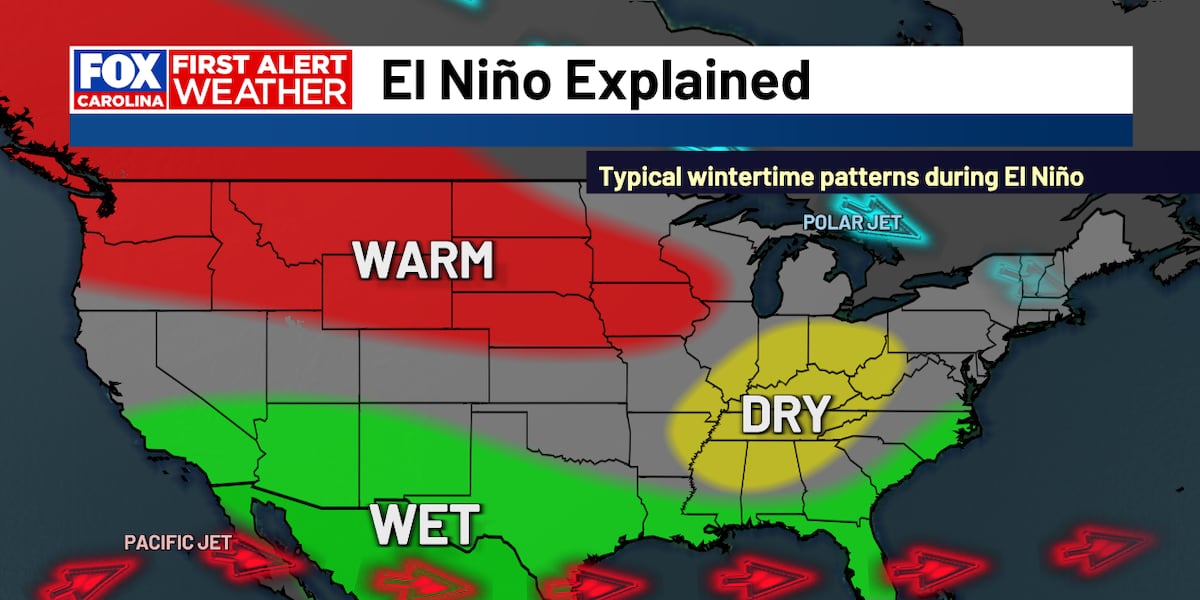
Should the El Niño trend persist into the winter months, a significant northward displacement of the jet stream is anticipated, leading to starkly differentiated regional weather patterns across the United States. This atmospheric reconfiguration holds substantial and asymmetric operational and economic implications for diverse sectors.
The Southern U.S. is projected to experience cooler and wetter conditions. This climatic shift can profoundly impact agricultural yields, necessitate revised water management strategies, and increase demands for infrastructure maintenance due to elevated precipitation. While potentially alleviating drought in some areas, it also elevates flood risks and complicates planting or harvesting schedules.
Conversely, the Northern U.S. is expected to contend with warmer and drier conditions. This directly influences energy demand for heating, heightens wildfire risks, and potentially exacerbates water scarcity issues in specific regions. These contrasting patterns necessitate highly localized, adaptive strategic responses from state and municipal authorities, private utilities, and agricultural enterprises to mitigate varied impacts.
Operational Imperatives: Agriculture and Water Resource Management Adapts to El Niño
The projected regional weather shifts directly dictate agricultural planning and influence commodity markets. A cooler, wetter South could necessitate significant adjustments in crop selection, optimize planting times, and refine pest management strategies, directly impacting yields for crops sensitive to moisture and temperature fluctuations.
For Northern regions, warmer and drier conditions pose distinct challenges, demanding advanced irrigation management techniques and increasing crop vulnerability to heat stress and drought. This climatic variability introduces significant uncertainty into agricultural futures and necessitates that producers and distributors revise hedging strategies and optimize supply chain logistics for resilience.
Water resource managers, particularly in drought-prone states like California and across the Southeast, must critically integrate these precise El Niño forecasts into their long-term reservoir management, allocation, and conservation plans. Anticipated precipitation changes are pivotal in dictating decisions on water storage, flood control, and ensuring adequate supplies for both urban and agricultural demands.
Energy Sector Resilience: Navigating Supply, Demand, and Infrastructure Risks
The energy sector faces direct and substantial operational and financial implications from El Niño-driven weather patterns. Warmer Northern winters could significantly reduce heating demand, thereby impacting natural gas and electricity market prices. Concurrently, cooler, wetter Southern conditions might alter energy consumption patterns, potentially increasing demand for cooling or impacting hydropower.
Hydropower generation, particularly in regions experiencing increased precipitation, could see enhanced output, strategically altering the energy mix and pricing dynamics. Conversely, prolonged dry spells in other areas could critically strain water-dependent cooling systems for thermal power plants or severely limit hydroelectric capacity, leading to potential supply constraints.
Infrastructure resilience becomes a paramount focus. Increased precipitation in the South could challenge drainage systems and transportation networks, while drier conditions in the North significantly heighten wildfire risks adjacent to critical energy transmission lines. Utility companies must strategically invest in grid hardening, predictive maintenance, and diversified energy sources to proactively mitigate these vulnerabilities.
Financial Markets & Investment Strategy: Quantifying and Hedging El Niño Risk
The prospect of a “super” El Niño introduces a significant, quantifiable variable into financial markets, particularly those tied to agricultural commodities, insurance, and infrastructure. Agricultural commodity prices are subject to substantial volatility based on anticipated crop yields and regional weather impacts, reverberating through global food supply chains and consumer prices.
Investment firms and hedge funds specializing in climate-sensitive assets actively integrate these precise meteorological forecasts into their sophisticated quantitative models. Their objective is to proactively identify investment opportunities and strategically mitigate risks, which includes rigorously assessing the performance and exposure of companies in agricultural production, water utilities, and coastal real estate.
Long-term capital expenditure decisions for critical infrastructure projects—such as advanced flood defenses, efficient irrigation systems, or resilient energy transmission networks—are increasingly influenced by these refined climate projections. Governments and private developers must rigorously factor in enhanced climate resilience, which may initially increase investment costs but significantly reduce future operational liabilities and societal costs.
Institutional Preparedness & Proactive Public Communication Frameworks
NOAA’s El Niño Watch serves as a direct directive for a multi-tiered institutional response, compelling federal, state, and local emergency management agencies to rigorously review, update, and stress-test their preparedness plans. This encompasses assessing resource inventories, refining communication protocols, and developing robust evacuation strategies for potentially affected areas.
Effective public communication becomes paramount, necessitating a clear, consistent, and scientifically accurate message that balances actionable advice with judicious caution, avoiding both alarmism and complacency. Organizations like Golden Gate Weather Services play a vital role in translating complex meteorological data into comprehensible insights for regional stakeholders, facilitating informed decision-making.
Media outlets, including regional affiliates like FOX Carolina and WRDW/WAGT, are integral to the efficient dissemination of these forecasts and their nuanced implications. Their role extends beyond simple reporting, critically shaping public perception and encouraging proactive community responses by contextualizing scientific data within local realities.
Adaptive Risk Management: Sustaining Resilience Against Cyclical Climate Variability
The inherent cyclical nature of El Niño, occurring every three to seven years, underscores the continuous strategic imperative for adaptive risk management across a broad spectrum of stakeholders. Businesses, ranging from small-scale agricultural operations to multinational corporations, must integrate climate variability as a core component of their long-term strategic planning and operational models.
This necessitates developing highly flexible supply chains, strategically diversifying operational locations, and investing in advanced weather analytics and predictive modeling capabilities to anticipate and proactively respond to evolving conditions. The competitive landscape increasingly favors entities that demonstrate superior foresight, agility, and resilience in managing climate-related risks.
Governments, at all jurisdictional levels, face the persistent challenge of harmonizing immediate disaster preparedness with robust, long-term climate adaptation policies. This critical balance includes sustained funding for climate research, strategic infrastructure improvements designed for future resilience, and comprehensive public education initiatives aimed at enhancing societal resilience against recurring climatic phenomena like El Niño.
El Niño in Context: Accelerating the Shift Towards Proactive Climate Adaptation
While El Niño is undeniably a natural climate cycle, its potential intensity, particularly the “super” designation, critically highlights the increasing sensitivity and vulnerability of human systems to amplified climate variability. The documented facts unequivocally underscore that these phenomena do not cause individual storms but fundamentally alter atmospheric conditions, thereby favoring certain weather patterns and significantly impacting the probability and intensity of extreme events.
This nuanced understanding accelerates a paradigm shift from reactive disaster response to proactive climate adaptation strategies, emphasizing the paramount importance of long-range forecasting, advanced scenario planning, and integrated risk assessment. The intrinsic interconnectedness of global climate systems means that temperature anomalies thousands of miles away can indeed trigger significant and localized shifts in weather patterns, demanding a holistic, global-to-local approach to risk management.
The ongoing, meticulous monitoring and precise communication from scientific bodies like NOAA provide the foundational, authoritative data essential for these adaptive strategies. This enables a more informed, anticipatory, and ultimately more resilient response to the inherent and increasingly impactful variability of Earth’s climate, with continuously evolving forecasting capabilities further refining the precision of these critical advisories.