
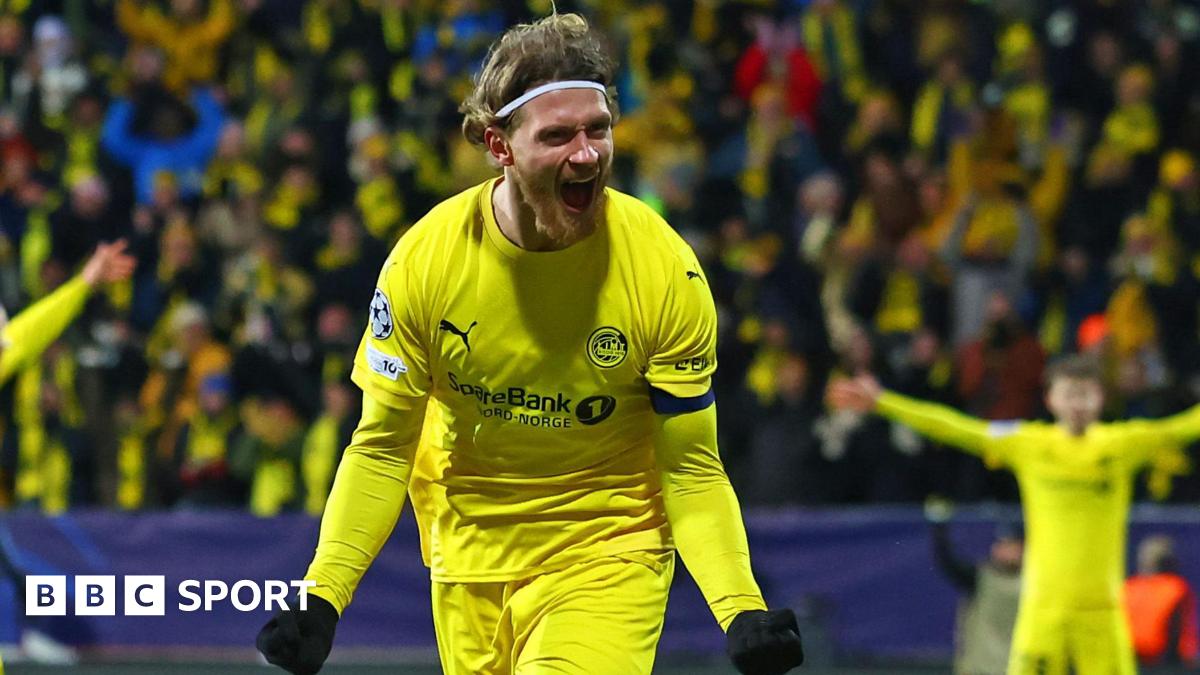
Inter Milan enters the decisive leg of the Champions League knockout-round playoff confronting a 3-1 aggregate deficit—a result that challenges the club’s domestic dominance and tactical stability. At San Siro, the Nerazzurri must navigate a high-variance environment against a Bodø/Glimt side that has redefined the competitive ceiling for mid-tier European clubs. This fixture serves as a critical litmus test for manager Cristian Chivu, whose tenure is currently defined by the need to balance historical ‘Pazza Inter’ volatility with contemporary tactical pragmatism.
Tactical Recalibration and the Lautaro Absence
The primary hurdle for Inter is the tactical void left by Lautaro Martínez. His absence removes a high-volume pressing trigger and a versatile finisher, forcing a redistribution of offensive duties. Chivu’s challenge lies in engineering a frontline capable of penetrating a Bodø/Glimt defensive unit that excels in compact mid-block structures. Without Martínez, Inter’s attacking sequences must shift from individual brilliance to collective spatial exploitation, utilizing wing-backs to stretch the Norwegian defense horizontally.
Bodø/Glimt’s 3-1 advantage provides them with the luxury of reactive football. Under Kjetil Knutsen, the Glimt model prioritizes verticality and transitional speed. Having already dismantled high-press systems from Dortmund and Atlético Madrid, the visitors will likely exploit the spaces vacated by an Inter side forced to commit numbers forward in search of an early goal. The strategic imperative for Inter is not just goal-scoring, but sustained defensive rest-prophylaxis to prevent a decisive away-goal sequence.
Financial Imperatives and Institutional ROI
Beyond the pitch, this fixture carries immense fiscal gravity. Progression to the Round of 16 is a non-negotiable component of Inter’s financial planning, impacting everything from UEFA coefficient rankings to seasonal revenue targets. In an era of strict amortization schedules and FFP scrutiny, the loss of Champions League broadcast and performance bonuses would represent a significant setback for the club’s long-term squad development goals.
Conversely, for Bodø/Glimt, victory would solidify the ‘Glimt Model’ as a blueprint for sustainable success. Their ability to compete against capital-intensive Italian giants illustrates a shift toward meritocratic technical efficiency over pure financial expenditure. A successful defense of their lead at San Siro would not only be a historic sporting achievement but a transformative commercial milestone for the Norwegian Eliteserien representative.
The San Siro Factor: Psychological and Environmental Leverage
San Siro remains a psychological theater where historical weight can either galvanize the home side or paralyze them under the expectation of a comeback. Chivu has leveraged this institutional history, framing Inter as the ‘ideal’ club to orchestrate such a recovery. However, the environmental advantage is mitigated by Bodø/Glimt’s proven composure in high-pressure European venues. The early match dynamics will be decisive; if Inter fails to disrupt Glimt’s rhythm in the opening 20 minutes, the pressure of the deficit may lead to the very tactical fragmentation Chivu seeks to avoid.
Comparative Tournament Trajectories
While Inter faces an uphill battle, the broader tournament landscape shows varying levels of control. Newcastle United’s 6-1 dominance over Qarabağ highlights the disciplined execution required at this level, while Atlético Madrid’s reliance on individual USMNT contributions underscores the thin margins of knockout football. For Inter Milan, there is no margin for error. The second leg is a confrontation between Inter’s institutional prestige and Bodø/Glimt’s algorithmic tactical efficiency, with the future of Chivu’s European campaign hanging in the balance.

Photo by dimitrisvetsikas1969 on Pixabay.