Systemic Instability in the Italian Aerospace Infrastructure
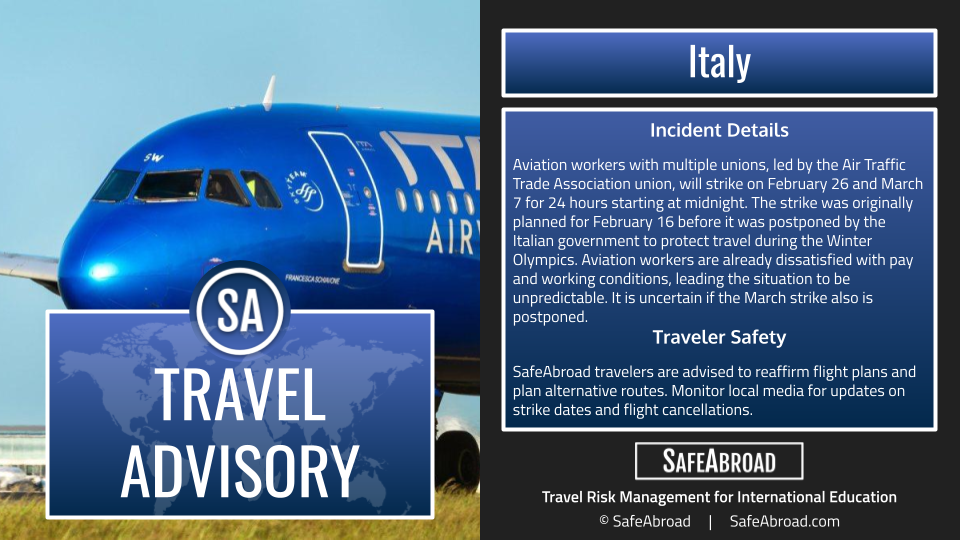
The Italian aviation sector enters a period of heightened volatility as the Air Traffic Trade Association and major transport unions ratify 24-hour strikes for February 26 and March 7, 2026. These industrial actions represent a significant escalation in a long-standing dispute over wage indexing and operational safety standards. The synchronization of these walkouts across the national aerospace grid suggests an intentional strategy to maximize leverage during a high-visibility international window.
Regulatory Injunctions and the Olympic Contingency
The rescheduling of the initial February 16 action followed an unprecedented regulatory intervention by the Ministero delle Infrastrutture e dei Trasporti. By exercising its authority to mandate a postponement, the state prioritized the logistical integrity of the 2026 Winter Olympics. However, this postponement served only as a temporary mitigation rather than a structural resolution. The new dates—situated strategically during the Paralympics and the post-Olympic recovery phase—indicate a tactical recalibration by unions to maintain pressure while bypassing the specific legal restrictions applied during the primary Olympic window.
Network Degradation and Hub Exposure
The withdrawal of air traffic control labor creates an immediate capacity bottleneck that transcends individual carrier cancellations. Major international gateways, specifically Rome Fiumicino (FCO) and Milan Malpensa (MXP), face the highest exposure. A 24-hour cessation of service triggers a cascading recovery period; the resulting aircraft and crew displacement often disrupts global schedules for 48 to 72 hours post-strike. For airlines, the financial burden includes not only lost revenue but the significant costs associated with the ‘Duty of Care’ legal requirements for stranded passengers.
Multimodal Friction: The Tourism Value Chain
The impact is compounded by concurrent labor actions in the rail and local transit sectors. This multimodal synergy targets the transit backbone connecting airport hubs to urban centers like Venice and Florence. Travelers face a ‘double-blind’ scenario where airport arrival does not guarantee onward passage to final destinations. This coordinated disruption highlights the vulnerability of the Italian tourism brand, where reliability is a key metric for international competitiveness during peak seasonal surges.
Regulatory Convergence and Entry Protocol Shifts
Compounding the operational chaos are significant shifts in EU entry requirements and passport regulations scheduled for 2026. The intersection of labor-induced delays and more stringent administrative border checks creates a high-risk environment for immigration bottlenecks. Stakeholders are advised that static itineraries are becoming obsolete; the current market demands real-time monitoring of regulatory bulletins and a move toward contingency-based travel planning.