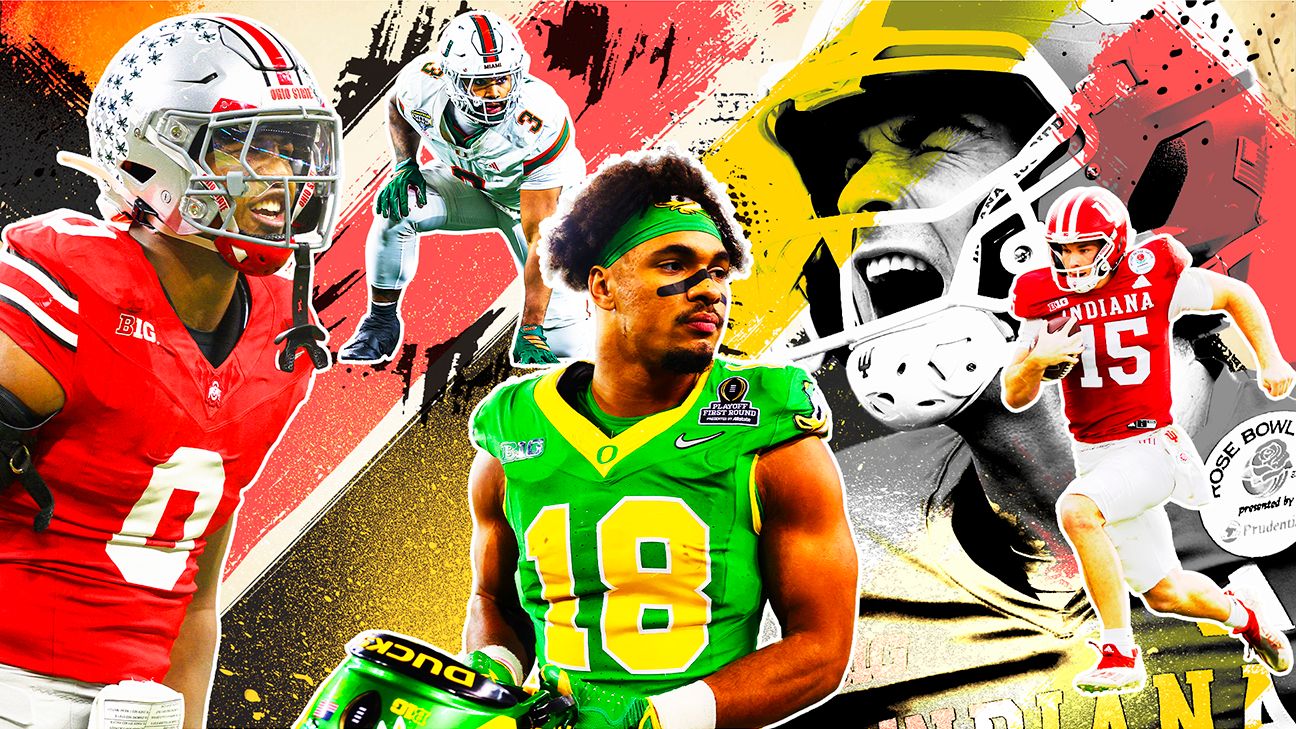
Institutional Evolution in Prospect Evaluation
The 2026 NFL Draft cycle signals a significant departure from traditional scouting paradigms, characterized by a transition from prioritizing physical ‘superpowers’ to valuing operational efficiency. As front offices confront a class with fewer blue-chip physical archetypes at marquee positions, the evaluation focus has shifted toward high-floor stability and schematic fit. This recalibration is most evident in the quarterback room, where technical precision is now weighed more heavily than raw athletic potential.
The Quarterback Dichotomy: Precision vs. Physical Variance
The valuation of Indiana’s Fernando Mendoza, the presumptive top selection and Heisman winner, serves as the primary case study for this shift. Mendoza’s 7.1% off-target rate establishes a new benchmark for modern NFL accuracy requirements, emphasizing his role as a high-volume, low-variance distributor. His profile offers franchises immediate stability, contrast with the high-variance gamble presented by Alabama’s Ty Simpson.
Simpson, though technically proficient, represents a physical outlier at 6-foot-1 and 211 pounds. With only 15 collegiate starts, his evaluation forces front offices to weigh technical maturity against a lack of historical data and durability concerns. Conversely, Penn State’s Drew Allar maintains value through his 6-foot-5 frame and arm elasticity, serving as the high-ceiling vertical threat for offenses that still prioritize physical dimensions over refined accuracy.
Capital Deployment and Trade-Up Mechanics
The 2026 landscape anticipates aggressive draft capital deployment, particularly from organizations like the Dallas Cowboys, known for seeking tactical advantages through upward mobility. These maneuvers are not merely talent acquisitions but ‘competitive window resets.’ Historical precedents, such as the Jaguars’ pursuit of Travis Hunter Jr. and the Vikings’ aggressive jumps for J.J. McCarthy, underscore a trend where teams sacrifice future assets to secure specific positional leverage.
This volatility in the first round triggers a secondary market economy; as top-tier talent is secured through trades, it increases the scarcity of remaining blue-chip prospects, often forcing reactive moves from mid-tier franchises. The premium on these ‘difference-makers’ extends beyond quarterbacks to versatile playmakers like Jeremiyah Love, whose top-five projection reflects the league’s desperation for elite yardage creators.
Ecosystem Construction and the 100-Trait Framework
Modern scouting has adopted a granular ‘100-trait’ superlative list to minimize evaluation errors. By isolating specific metrics—such as first-step explosiveness for edge rushers or hand-eye coordination for receivers—teams can match prospects to existing rosters with surgical precision. For the New England Patriots, this involves identifying ‘must-pick sleepers’ to insulate Drake Maye, shifting the strategy from finding a singular savior to constructing a sustainable offensive ecosystem.
Furthermore, the 2026 class offers significant depth in the trenches. This allows disciplined front offices to ignore the ‘sizzle’ of skill positions in favor of high-impact offensive and defensive linemen. By securing these foundational assets via the draft, teams manage long-term salary cap constraints more effectively, as elite trench play remains the most expensive commodity in the free-agent market.
Conclusion: The Maturity Premium
Ultimately, the 2026 cycle will be defined by the ‘maturity premium.’ Prospects like LSU’s Garrett Nussmeier, who offer extensive starting experience and pre-snap recognition, provide the predictability required by risk-averse decision-makers. In an era of analytical scrutiny, the ability to identify prospects who can bypass the standard multi-year developmental curve will be the differentiator for front offices aiming to maximize their competitive windows.