
Class I Network Integration: The Physics of Legacy Assets
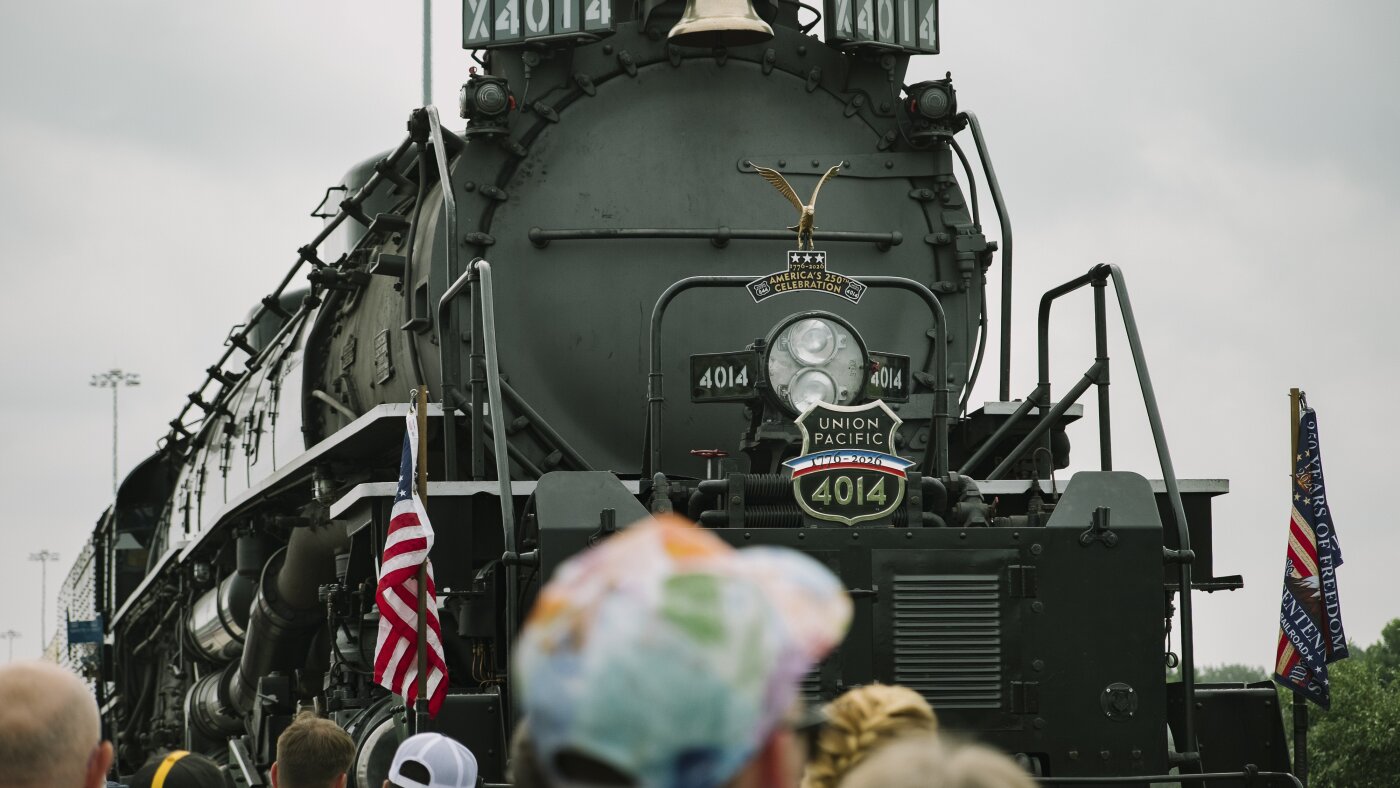
The cross-country operations of Union Pacific Railroad’s Big Boy No. 4014 represent a sophisticated engineering challenge: integrating a 1.2-million-pound, 133-foot-long legacy locomotive into a Class I freight network optimized for automated signaling, precision routing, and high-density diesel-electric traffic. Far from a passive museum piece, No. 4014 acts as an active, high-axle-load locomotive subject to the mechanical demands, weight distributions, and curve radii of modern mainline infrastructure.
Coordinating this tour within the context of the United States’ 250th anniversary highlights the operational flexibility of modern dispatch systems. Safely pathing a steam-powered locomotive—which exhibits different acceleration curves, braking profiles, and servicing requirements than modern diesel-electric consists—requires precise headway planning to mitigate delays across high-volume freight and passenger corridors.
Corporate Strategy and Historical Capitalization
Maintaining the world’s largest operational steam locomotive is a calculated investment in brand equity and corporate diplomacy. By dedicating capital, specialized facilities, and rare mechanical expertise to this legacy project, Union Pacific projects institutional longevity and industrial capability. This high-visibility asset serves as a mobile corporate ambassador, strengthening relationships with regulatory bodies, local municipalities, and the public while reinforcing the railroad’s foundational role in American supply chains.
Digital Telemetry and Modern Public Engagement
The integration of real-time GPS tracking and dedicated mobile applications represents a technological bridge between 20th-century steam mechanics and modern consumer habits. Rather than relying on passive historical displays, Union Pacific leverages real-time digital telemetry to manage spectator distribution along active rights-of-way. This deployment of modern data analytics mitigates the safety risks associated with large, localized gatherings near high-speed rail lines.
Thermodynamic, Civil, and Environmental Risk Management
Operating legacy steam equipment under extreme meteorological conditions—such as the 102-degree Fahrenheit ambient temperatures documented during the tour’s Philadelphia transit—tests the absolute limits of 1940s metallurgy and human endurance. Managing thermal expansion, maintaining lubrication efficiency, and preventing boiler scale under these conditions demand rigorous mechanical supervision.
Furthermore, managing high-density crowds at public access points like Valley Forge National Historical Park requires coordinated civil planning. The operational challenge lies in balancing corporate public relations goals with strict physical security, ensuring that spectators do not compromise active rail infrastructure or disrupt adjacent commercial operations.
Industrial Heritage and Tribological Benchmarks
The tour provides invaluable empirical data regarding the mechanical wear, tribological performance, and structural fatigue of vintage boiler and running gear designs. This continuous operational feedback loop informs future maintenance schedules, component replication techniques, and safety profiles for legacy machinery. The technical insights gathered from operating No. 4014 at mainline speeds serve as an industry-wide benchmark for the survival and viability of historic industrial heritage assets.
Photo by code83 on Pixabay.