
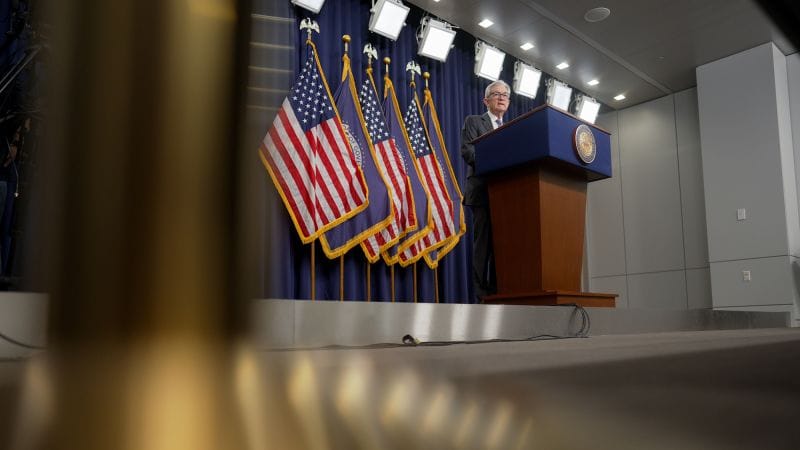
Powell Navigates Political Inquiries, Emphasizing Fed Independence
Federal Reserve Chair Jerome Powell recently demonstrated a steadfast commitment to the central bank’s independence by refusing to answer multiple questions pertaining to politics during a press conference. This deliberate silence on politically charged topics is not an anomaly but rather a consistent feature of the public persona Powell has cultivated throughout his tenure.
The Federal Reserve, by its very design, operates with a degree of insulation from direct political influence. Its mandate to maintain stable prices and maximize employment is intended to be guided by economic data and analysis, rather than the shifting winds of political favor or opposition. Powell’s actions serve to reinforce this critical operational principle.
The ‘Just-the-Facts’ Persona and Its Significance
Powell’s approach is characterized by a focus on data, economic indicators, and the technical aspects of monetary policy. This ‘just-the-facts’ persona, carefully constructed and consistently maintained, aims to build trust and credibility with the public and financial markets alike. It signals that the Fed’s decisions are rooted in economic realities, not political expediency.
This adherence to a factual, apolitical stance is particularly crucial in an environment where the Federal Reserve’s actions can have profound impacts on the economy, affecting everything from interest rates and inflation to job growth and asset values. Any perception of political bias could undermine the Fed’s effectiveness and its ability to achieve its dual mandate.
Why This Matters: Preserving Monetary Policy Independence
Powell’s refusal to engage with political questions underscores a broader, ongoing debate about the independence of central banks globally. In many nations, central banks have faced increased pressure from political actors seeking to influence monetary policy for short-term gains. The Federal Reserve, as one of the world’s most influential central banks, is a frequent target of such pressures.
The advice Powell might offer his successor, as suggested by the context, would likely revolve around maintaining this independence. His battle with political interference, particularly from figures like former President Trump who have openly criticized Fed policy, highlights the challenges inherent in safeguarding the Fed’s autonomy. Such advice speaks volumes about the perceived threats to the institution’s operational integrity.
Broader Trends: Central Banks and Political Scrutiny
Globally, central bankers are increasingly finding themselves at the nexus of complex economic challenges and political pressures. Issues such as inflation, quantitative easing, and interest rate adjustments often become politicized, leading to calls for greater accountability or direct political oversight. Powell’s deliberate stance is a response to this challenging landscape.
The ‘Trump Accounts’ summit, mentioned in the input data, suggests a potential political initiative aimed at economic policy or financial markets. While the specifics are not detailed, the context implies an environment where political leaders are actively engaging with financial and economic matters, potentially creating opportunities for friction with the independent stance of the Federal Reserve.
Looking Ahead: The Enduring Importance of Fed Autonomy
Jerome Powell’s term as Federal Reserve Chair is a significant period, and his actions in upholding the Fed’s independence will be a key part of his legacy. The strength and credibility of the U.S. economy are closely tied to the perceived impartiality of its central bank.
As Powell continues his term, his ability to navigate these political crosscurrents while focusing on the Fed’s economic objectives will be closely watched. The effectiveness of monetary policy hinges on the public’s confidence that decisions are based on sound economic principles, free from partisan influence. The upcoming summit, and any subsequent actions stemming from it, will likely be monitored for their potential impact on the delicate balance between fiscal policy and monetary independence.