Strategic Implications of the Dreyer’s Grand Ice Cream Voluntary Recall
The August 16, 2026, announcement by Dreyer’s Grand Ice Cream regarding a voluntary recall of select Outshine Fruit Bars represents a critical intervention in consumer safety. Triggered by potential glass fragment contamination, this action affects a targeted subset of the brand’s portfolio—including Strawberry, Watermelon, Grape, Tangerine, and Black Cherry—distributed through expansive nationwide logistics networks. By preemptively initiating this recall, Dreyer’s is balancing regulatory compliance with brand equity preservation, seeking to mitigate physical risk and legal exposure simultaneously.
Operational Integrity and Detection Limitations
Foreign material contamination, particularly glass, typically indicates a failure in mechanical integrity or a breach in structural maintenance within a high-speed manufacturing environment. Standard automated quality control often relies on metal detection; however, glass fragments necessitate advanced X-ray inspection. The initiation of this recall suggests that current internal protocols or consumer feedback identified a breach that non-metallic detection systems missed. This event likely mandates a comprehensive audit of the Walnut Creek facility to reinforce preventative controls and rectify the root cause of the structural failure.
Logistical Precision and Supply Chain Traceability
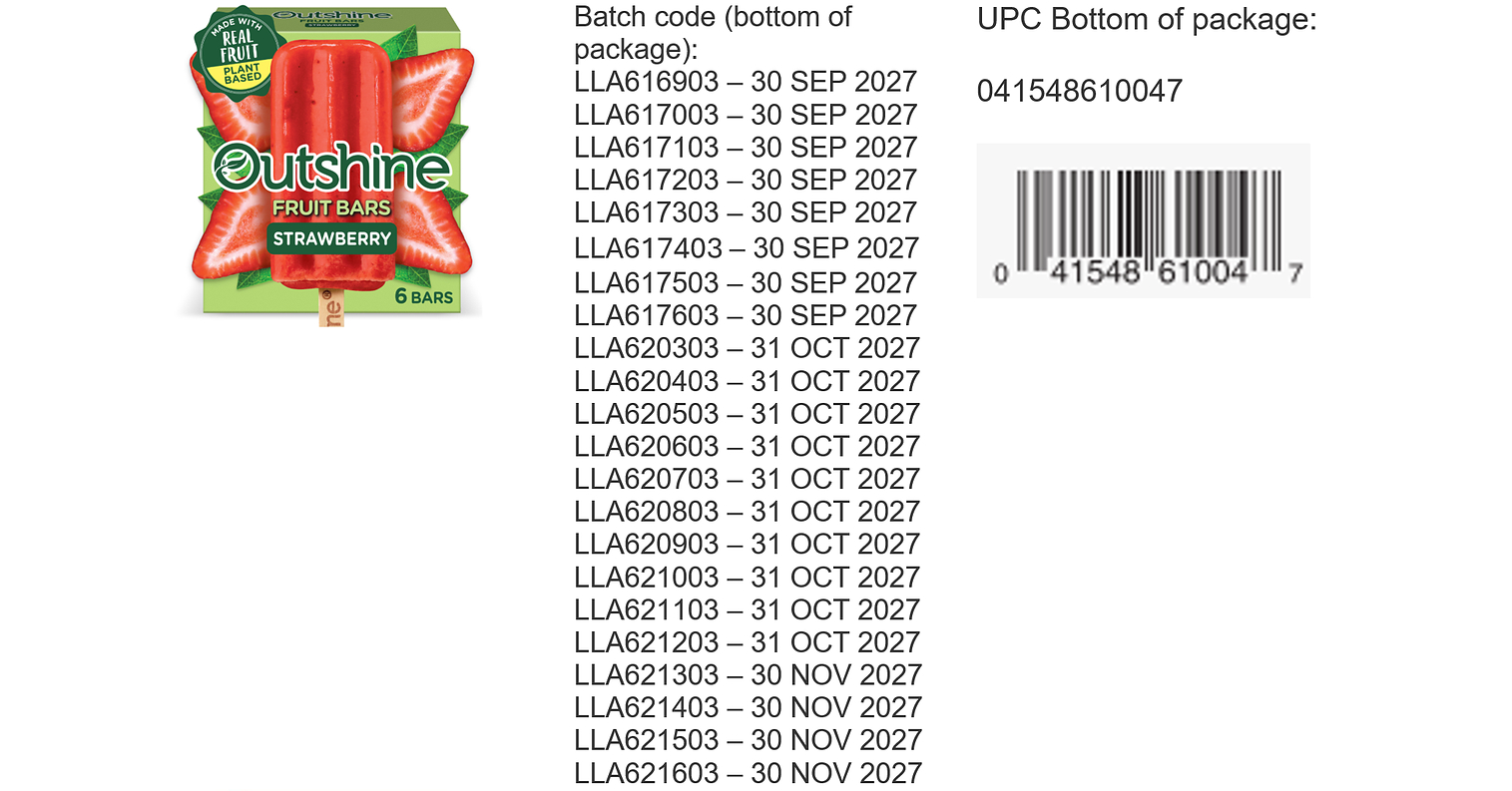
The recall’s focus on 6-count, 2.5-ounce packages allows for a surgical removal process, minimizing waste while maximizing safety. The affected LLA batch series, with expiration dates extending into late 2027, presents a long-term risk profile as these products may remain in consumer inventory for months. Dreyer’s emphasis on batch code identification (e.g., LLA616903 through LLA621603) highlights the necessity of granular traceability in modern supply chains. This precision enables the isolation of specific production windows without compromising the entire brand inventory.
Brand Impact and Consumer Psychology
Outshine’s premium positioning as a health-conscious, fruit-based snack is particularly vulnerable to physical contamination events. Unlike biological risks, glass presents a visceral, immediate injury threat that can cause lasting damage to consumer trust. The financial consequences extend beyond direct logistics and product destruction to include indirect costs like market share erosion. The speed of Dreyer’s disclosure and its transparency regarding UPCs—such as 041548610047 for the Strawberry variety—are essential components in managing brand perception and fulfilling institutional accountability under FDA oversight frameworks.