Strategic Realignment of Platform Governance
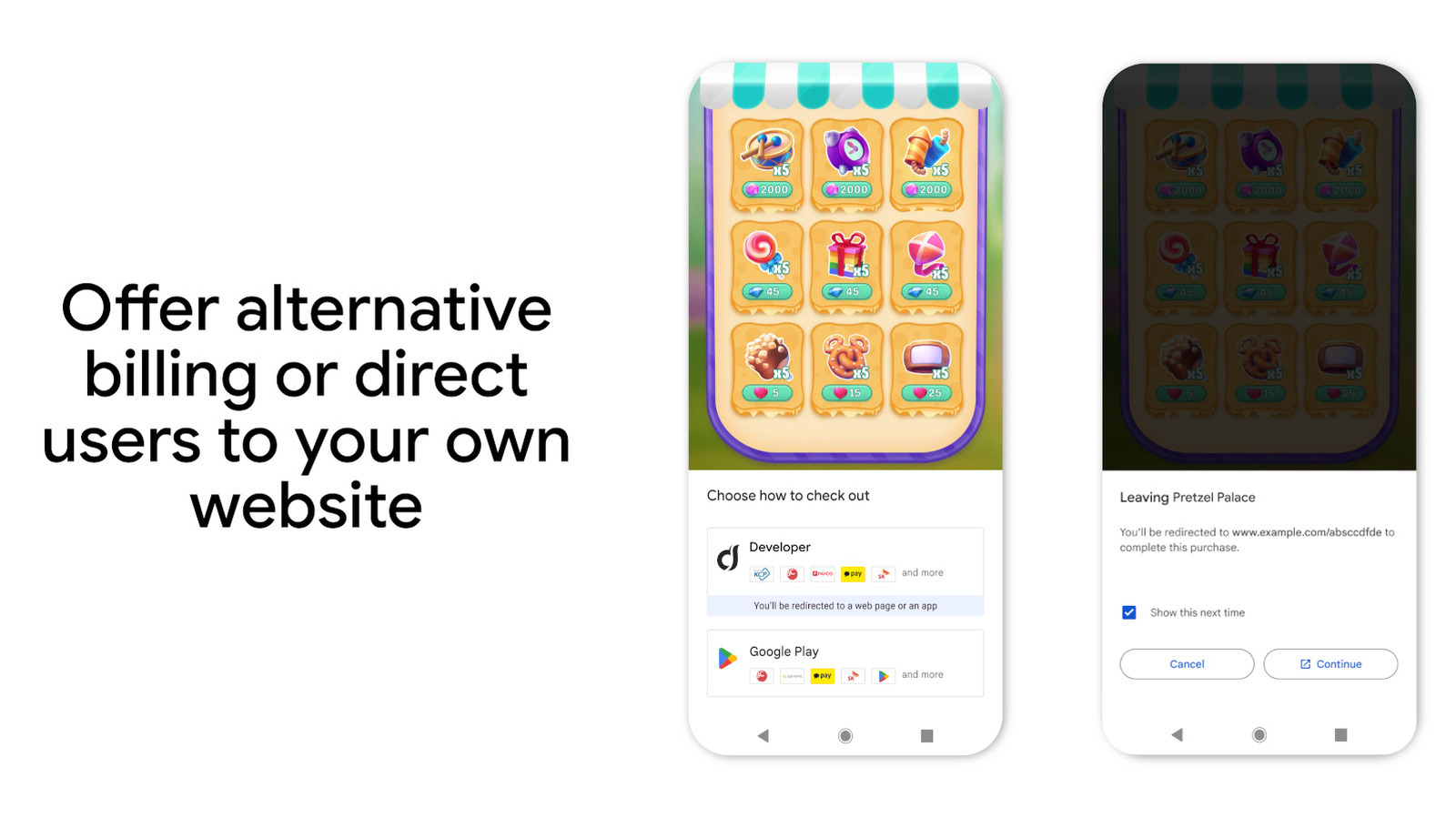
The transition of the Google Play Store toward a multi-billing ecosystem marks a fundamental shift in platform governance. By permitting alternative payment systems, Google is decoupling application distribution from transaction processing. This structural unbundling directly addresses long-standing antitrust scrutiny regarding digital marketplace monopolies, forcing Google to adapt its highly profitable closed-loop model to survive a fragmenting regulatory landscape.
This policy evolution, accelerated by the Epic Games legal settlement, introduces a distinct separation between application service fees and transaction billing fees. By bifurcating these revenue streams, Google attempts to preserve its core marketplace commission structure while mollifying international regulatory bodies challenging the traditional software distribution paradigm.
Bifurcated Economic Incentives for Developers
The revised financial model establishes a tiered commission system, offering a reduced 10 percent rate for the first $1 million in annual developer revenue. This targeted concession lowers barriers to entry for independent creators, neutralizing public and regulatory criticism of monopolistic rent-seeking. Conversely, enterprise-level developers face a more complex pricing architecture, with commission rates ranging from 20 to 25 percent for standard transactions and one-time purchases.
This pricing hierarchy demonstrates Google’s strategy to protect its primary revenue streams from high-volume publishers while providing sufficient financial relief to smaller developers to defuse broader industry resistance. Consequently, the financial viability of alternative billing mechanisms remains highly dependent on a developer’s scale of operations.
Operational Overhead and Regional Fragmentation
Integrating alternative billing engines introduces a checkout “choice screen,” bringing new integration challenges. While developers gain greater transactional autonomy, Google’s compliance guidelines shift the burden of payment security, fraud prevention, and customer support directly onto the developer. This transfer of administrative responsibility can increase operational overhead, offsetting potential fee savings for mid-sized enterprises.
Furthermore, the geographically fragmented rollout—commencing in the US, UK, and Europe, before expanding to Australia, Japan, and South Korea—adds compliance complexity. Google must align its global platform architecture with localized, highly specific regulatory frameworks, resulting in a fractured user experience across different jurisdictions.
Preemptive Market Defense and Future Outlook
The legal conflict with Epic Games exposed the structural vulnerabilities of the historical 30 percent flat-rate commission model. By proactively implementing these payment alternatives, Google seeks to preempt more disruptive judicial mandates, such as the forced distribution of third-party marketplaces directly within the Play Store ecosystem.
The long-term impact on consumer pricing remains highly speculative. Because developers are not legally obligated to pass transaction savings down to the end-user, many may retain the margin improvements to fund internal operations or marketing. As Google extends these infrastructure adjustments globally through 2027, the resulting framework will serve as a critical blueprint for the future of mobile commerce and app ecosystem economics.