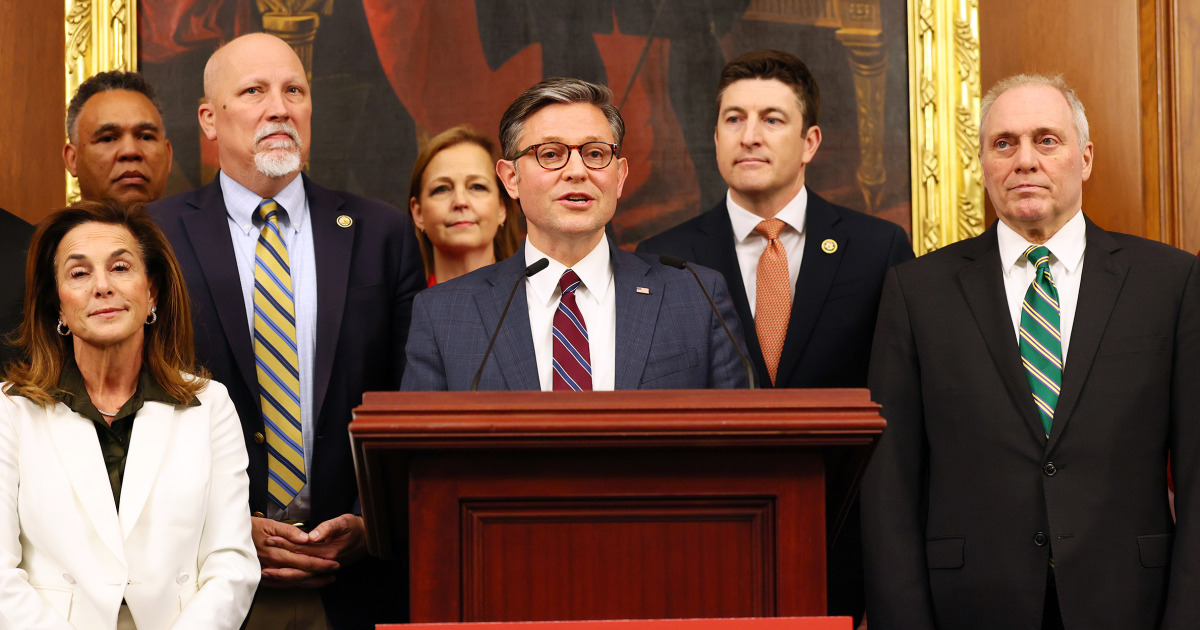
The United States House of Representatives has passed the SAVE America Act (H.R. 8281), a 32-page legislative framework designed to recalibrate the jurisdictional boundaries of federal election administration. Approved in a 218-213 vote, the bill reflects a stark partisan divide, garnering unanimous Republican support and a single Democratic crossing from Representative Henry Cuellar. This movement, heavily influenced by former President Donald Trump, seeks to codify stringent Documentary Proof of Citizenship (DPOC) requirements, fundamentally altering the mechanics of voter registration and the constitutional balance between state and federal authorities.
Operational Pivot: Mandating In-Person DPOC
The core of the SAVE America Act centers on a mandate for states to obtain physical DPOC—such as a U.S. passport or birth certificate—during the voter registration process for federal elections. By requiring these interactions to occur in person, the legislation introduces significant administrative friction. This shift reverses the long-standing trend toward digitized, remote government services, forcing local election offices to handle increased foot traffic and manual verification of sensitive documents. The logistical burden is expected to disproportionately affect jurisdictions with limited staffing, potentially creating registration bottlenecks.
Standardization vs. State Autonomy in Balloting
Beyond registration, the Act imposes uniform photo identification requirements for both in-person and mail-in balloting. For absentee voting, the bill requires a dual-submission loop: voters must provide ID copies when requesting and when returning a ballot. This requirement introduces new data privacy risks, as local offices must securely manage an influx of sensitive identity data. Strategically, these mandates challenge the traditional autonomy granted to states under the Elections Clause, moving toward a centralized federal standard that may supersede more flexible state-level arrangements.
Constitutional Tension and the Elections Clause
The SAVE America Act tests the limits of Article I, Section 4 of the Constitution. While the Elections Clause allows Congress to alter state regulations, historical precedent has favored state-led administration to prevent national political factions from exerting undue influence. Critics argue the bill represents a federal overreach that could be used to pressure local officials. This legislative shift, paired with related proposals like the MEGA Act, suggests an expansion of executive branch oversight that could facilitate federal interference in what has traditionally been a localized, non-partisan process.
Administrative Liability and Criminalization
A significant departure from previous election law is the introduction of criminal penalties for election administrators. The bill exposes local officials to imprisonment for failing to strictly adhere to new documentary protocols. This escalation from administrative oversight to criminal liability creates a chilling effect, potentially deterring qualified personnel from seeking election office. Furthermore, the focus on noncitizen voting—an occurrence that data suggests is statistically rare—indicates that the bill functions as a tool for political signaling as much as a mechanism for security.
Institutional Consequences and Fiscal Impact
If enacted, the SAVE America Act would impose an unfunded mandate on states, requiring massive overhauls of voter registration databases and poll-site procedures without guaranteed federal funding. While House Speaker Mike Johnson frames the bill as a “common-sense” security measure, the practical result is a more fragmented electorate. Demographic groups lacking immediate access to passports or birth certificates may face increased barriers to entry. As the bill heads to a Democrat-controlled Senate, its passage serves as a barometer for the escalating national conflict over the definition of election integrity.