
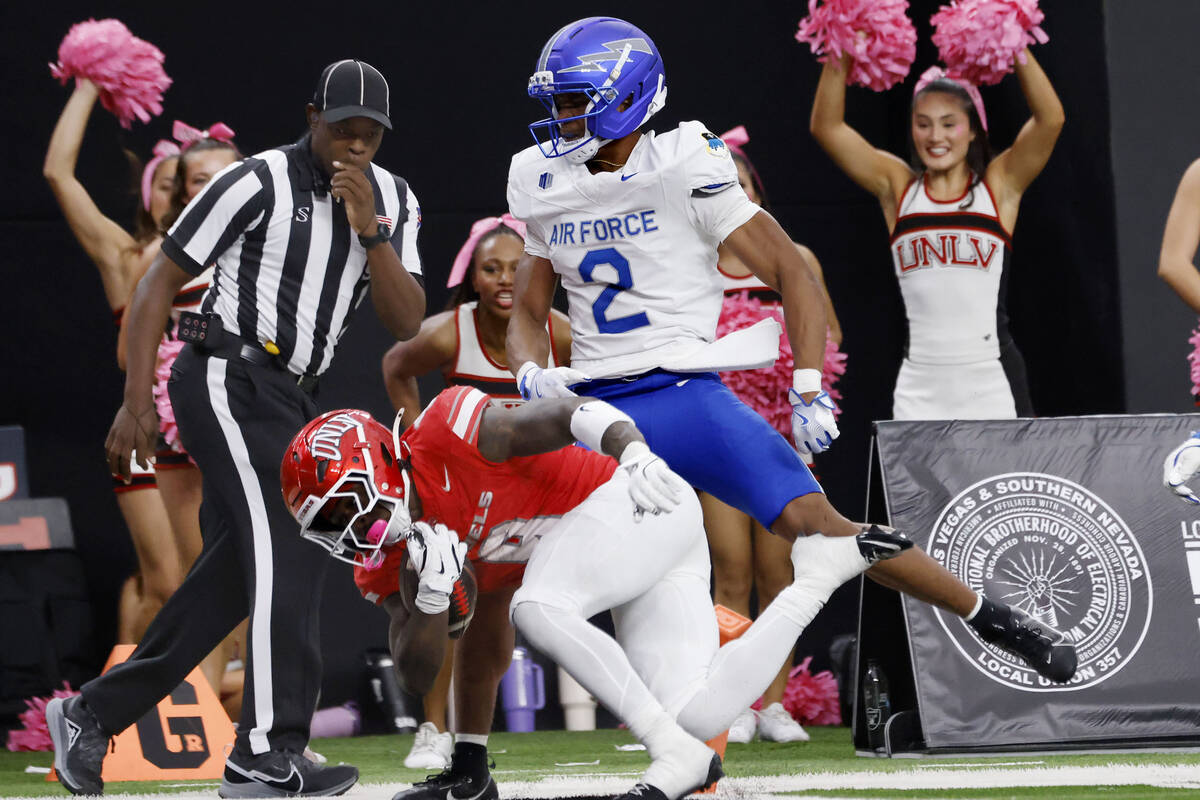
Broadcast Window and Mountain West Title Leverage
The UNLV Rebels travel to Colorado Springs to face the Air Force Falcons at 3:30 p.m. EDT at Falcon Stadium, broadcast nationally on CBS Sports Network. Beyond conference standings, this linear television window delivers critical program exposure amid collegiate realignment pressures. UNLV enters atop the Mountain West leaderboard, aiming to secure high-leverage positioning for the league championship game, while Air Force seeks to validate its adjusted tactical identity following significant personnel disruption.
Wagering Lines: Market Efficiency and Total Suppression
Sportsbooks opened Air Force as a narrow 1.5-point home favorite (-113 moneyline), with UNLV priced at +1.5 (-104) and -106 on the moneyline. The game total sits at 48.5 points, with oddsmakers shading the under at -115 versus -105 for the over. The 1.5-point spread functions effectively as a statistical pick’em, pricing home-field advantage as the primary differentiator between two structurally contrasting rosters.
Market action on the 48.5 total reflects a fundamental shift from the previous encounter in Las Vegas, where UNLV outlasted the Falcons 51-48. Current pricing indicates institutional confidence in pace suppression and restricted possession counts. The shading toward the under highlights expectations of prolonged clock-draining sequences, limiting overall drive volume and high-variance explosive plays.
Air Force Tactical Adjustment: Evan Medders’ Zero-Pass Ground Model
The tactical core of the Falcons’ offense shifted abruptly following a season-ending injury to starting quarterback Liam Szarka. Backup quarterback Evan Medders assumed command, guiding Air Force to an operational road win over Northern Illinois without attempting a single forward pass. This extreme run-exclusive execution reflects triple-option discipline, driving time-of-possession dominance while mathematically eliminating turnover risks associated with downfield passing.
However, an offense operating with zero intermediate or vertical aerial threats introduces stark structural constraints. Against a disciplined defensive front, compressed box formations can systematically restrict perimeter option pitches and interior dive lanes. Without play-action passes to hold safeties off the line of scrimmage, Air Force relies entirely on front-line blocking leverage, assignment timing, and avoiding negative-yardage penalties that would derail drive efficiency.
UNLV Defensive Metrics and Structural Front-Box Control
Under scrutiny from regional analysts, including Las Vegas Review-Journal columnists Ed Graney, Donovan Hicks, and Adam Hill, the Rebels’ defensive unit has emerged as arguably the premier group in the Mountain West. Through their conference schedule to date, UNLV has surrendered just 13 cumulative points. This represents a distinct departure from historical program baselines that often relied on winning high-scoring, high-tempo shootouts.
UNLV’s defensive resurgence creates a strategic counter to Air Force’s pacing. By minimizing missed tackles and filling interior run gaps, the Rebels force triple-option schemes into third-and-medium situations where ground-only conversion rates decline sharply. Furthermore, UNLV has displayed atypical road consistency away from Allegiant Stadium, insulating the roster against the traditional altitude and environmental variables associated with playing at the Air Force Academy.
Media Divergence and Analytical Consensus
Wagering analysts and beat reporters diverge sharply in their game projections. While Action Network analysts backed Air Force on the moneyline (-113), trusting Medders’ operational ball security and service-academy execution at home, the Las Vegas Review-Journal sports desk leaned toward UNLV, projecting margins of 30-28 and 28-17 in favor of the visiting Rebels.
This analytical split centers on whether a modern collegiate defense can be solved by an exclusively run-based scheme over 60 minutes. If UNLV’s defensive front stacks the box and prevents explosive perimeter option plays, the Falcons lack an established passing counter. Conversely, if Air Force controls the line of scrimmage and sustains 8-to-10-minute possessions, UNLV’s offensive unit will face compressed possession equity in Colorado Springs.

Photo by Pexels on Pixabay.